
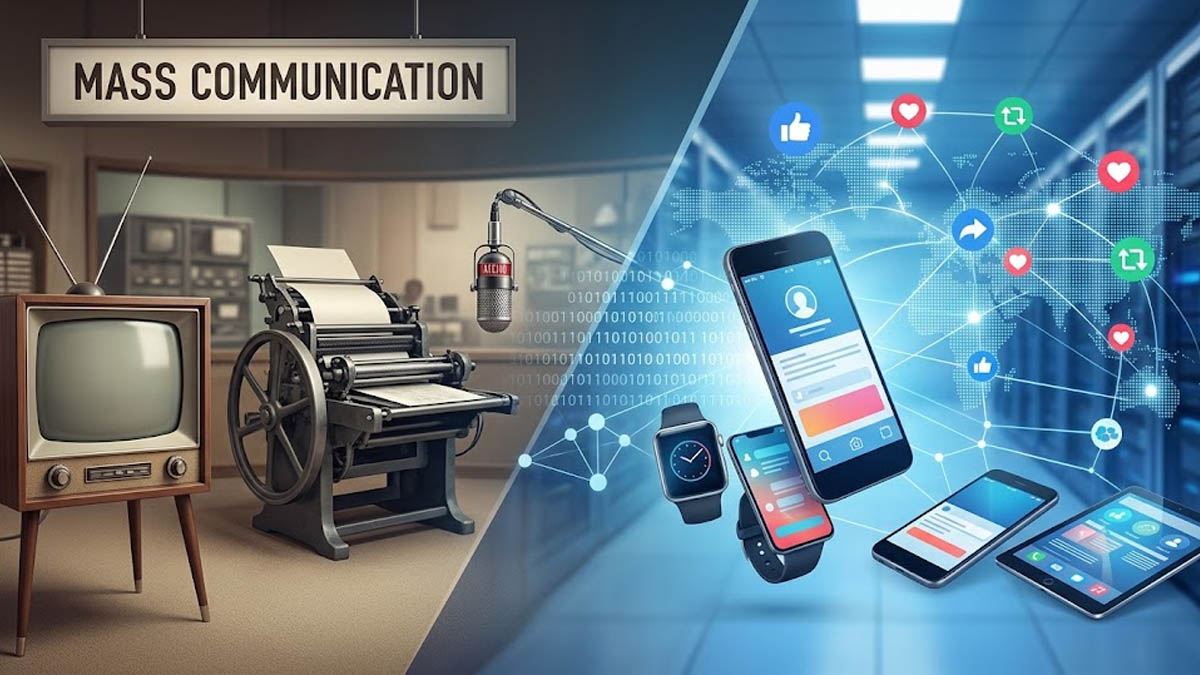
Not too long ago, a political party’s communication strategy was straightforward: write a press release, hold a press conference, and hope the evening news or the morning newspaper covered it favorably. Political discourse was a one-way street, carefully scripted by PR strategists and filtered through newsroom editors.
Today, that entire playbook is obsolete. A single tweet from an elected official can trigger a diplomatic crisis, a viral TikTok trend can mobilize millions of first-time voters, and a live stream can bypass traditional media entirely.
The digital revolution has not just updated the tools of political communication—it has radically redefined its speed, style, and power dynamics. Here is a historical look at how social media transformed political communication forever.
The Collapse of the Gatekeeper: From Monologue to Multilogue
For most of the 20th century, traditional media outlets acted as the primary gatekeepers of political discourse. Television anchors, radio hosts, and newspaper editors held the power to decide which political topics were worthy of public attention and which were pushed to the margins.
Social media dismantled this monopoly on information. Platforms like X (formerly Twitter), Facebook, Instagram, and TikTok allowed political actors to establish a direct line of communication with the public.
Direct Disintermediation
Politicians no longer need to wait for a media interview to address an issue. They can publish their thoughts directly to millions of followers in real time, framing narratives on their own terms without pushback from journalists.
Citizen-Led Agenda Setting
The flow of information is no longer strictly top-down. Through hashtags, viral videos, and online petitions, ordinary citizens can now elevate local issues to global headlines, forcing politicians and mainstream media to respond to public outrage rather than dictating the news cycle.
The Shift in Political Style: Authenticity Over Authority
In the era of television, political communication rewarded polish, gravitas, and carefully rehearsed speeches. In the social media era, the currency of political communication has shifted toward authenticity and relatability.
Social media algorithms prioritize content that feels personal, immediate, and raw. This has forced political leaders to adjust how they project authority:
Casual and Unfiltered Persona
Modern politicians often share behind-the-scenes glimpses of their lives—from cooking dinner on Instagram Live to answering questions while walking through an airport. This creates a parasocial relationship, making voters feel as if they know the leader on a personal level.
The Rise of “Meme Politics”
Complex policy proposals are increasingly condensed into short-form videos, infographics, and memes. Humor, satire, and pop-culture references have become central tactics for grabbing the attention of younger demographics who rarely consume traditional news broadcasts.
Algorithmic Polarization and the “Outrage Economy”
While social media democratized political communication, it also introduced structural challenges that strain democratic health. Social media platforms operate on algorithms designed to maximize user engagement. Historically, the content that generates the highest engagement is that which triggers strong emotional reactions—specifically anger, outrage, and fear.
This dynamic has fundamentally altered political messaging:
Hyper-Partisanship and Echo Chambers
Political communication has grown increasingly hostile and polarized. Messages designed to attack opponents perform significantly better algorithmically than nuanced policy discussions. As a result, users are often funneled into ideological echo chambers where their existing biases are constantly reinforced.
Micro-Targeting and Tailored Narratives
Unlike television broadcasts that reach a broad, general audience, social media advertising allows political campaigns to use data analytics to micro-target specific voter demographics. Campaigns can send completely different—and sometimes contradictory—messages to different groups of voters without public oversight.
Micro-Influencers and the Decentralization of Influence
In the early days of social media, political communication was still dominated by official party accounts and high-profile figures. Today, influence has become hyper-decentralized.
Political campaigns now rely heavily on network effects, engaging micro-influencers, independent content creators, and podcasters to deliver political messages. Voters who are deeply distrustful of mainstream politicians or traditional news sources are often far more receptive to political messaging when it comes from a trusted lifestyle creator, streamer, or community figure.
This shift means political messaging is no longer just about persuading the masses; it is about activating specialized digital communities through trusted peers.
The Future: Navigating Synthetic Content and Real-Time Politics
As political communication continues to evolve, new challenges are emerging at the intersection of social media and emerging technologies. The rise of artificial intelligence, synthetic media (deepfakes), and automated bot networks poses a threat to the integrity of public discourse, making it harder for citizens to distinguish between genuine political communication and coordinated manipulation.
Ultimately, the social media era has made political communication faster, more interactive, and far more accessible than at any point in human history. However, it has also made it more fragmented and emotionally charged. The future of democratic participation will depend on how well societies learn to navigate this high-speed, algorithmically driven media landscape.