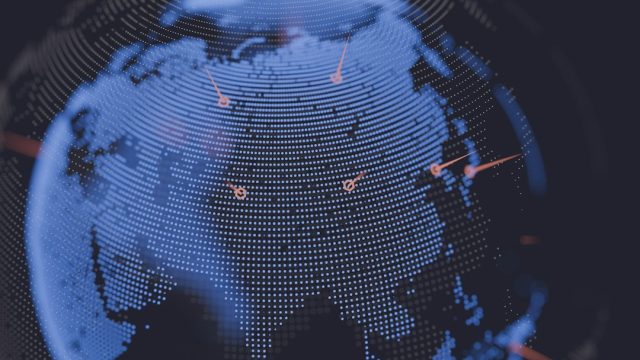
For centuries, political power was geographically bound and institutionally centralized, defined by the state’s monopoly on legitimate force and physical resources. Today, that architectural model has ruptured. Political authority is no longer exclusively sovereign or tied to land; it is deeply privatized, dispersed, and embedded within digital infrastructures. Examining how political power is distributed in…
For decades, digital platforms were promoted by their creators as neutral, frictionless utilities—open public squares where anyone could connect, share ideas, and engage in democratic commerce without institutional interference. Software was framed as ideology-free code, and platforms were viewed simply as digital bulletin boards hosting user-generated content. The reality of the 21st century has thoroughly…
For millennia, political authority was anchored to physical control over territory, bodies, and institutional hierarchies. Whether manifested through absolute monarchy, military might, or bureaucratic state apparatuses, power flowed vertically. Rulers asserted authority by occupying physical space, taxing visible commerce, controlling printing presses, and enforcing laws through centralized administrative machinery. The digital revolution has fundamentally rewritten…
For decades, political and economic analyses treated the internet as an ethereal “cloud”—an invisible, borderless space floating entirely above traditional geopolitics. Infrastructure such as fiber-optic cables, data centers, server farms, and satellite constellations was viewed as the neutral domain of telecommunications engineers and commercial corporations, operating far away from the concerns of statecraft and sovereignty.…
For generations, the instruments of public governance, media distribution, and social coordination were transparently anchored to laws, institutions, and human actors who could be questioned, voted out of office, or held legally accountable. Public policy debates centered on taxes, rights, budgets, and legislation. Today, algorithms have transformed from background technical tools into one of the…
For centuries, the geography of power was anchored to the physical earth. Nations commanded influence through landmass, military might, maritime trade routes, and sovereign control over territorial borders. A country’s geopolitical weight was visible on a physical map: measured in square miles, factory outputs, and troop deployments. The 21st century has completely redrawn this cartography.…
For decades, technical standards were viewed as the invisible plumbing of the global economy. Drafted by quiet engineering committees, bodies like the International Organization for Standardization (ISO), the International Electrotechnical Commission (IEC), and the International Telecommunication Union (ITU) operated on the assumption that standards were purely objective, apolitical, and commercial. Their job was simply to…
For the first few decades of the digital age, the foundational promise of the internet was borderless. Enthusiasts and architects envisioned a frictionless global village where data, ideas, and communication traversed oceans and national boundaries instantaneously, rendering traditional geographic checkpoints obsolete. Today, that vision has been systematically dismantled. The unified global web is fracturing into…
For centuries, the balance of global influence was calculated through a tangible calculus: the size of a nation’s standing army, the square mileage of its territory, its control over maritime trade routes, and the sheer output of its industrial smokestacks. Wealth and power flowed from physical geography and natural resources. Today, that traditional hierarchy has…
For decades, digital platforms were marketed as neutral, borderless tools of communication and commerce. Silicon Valley tech giants operated under the banner of connecting the world, treating national borders, local laws, and traditional diplomacy as friction to be optimized away. Today, that fantasy has vanished. Digital platforms are recognized as major actors in global politics,…