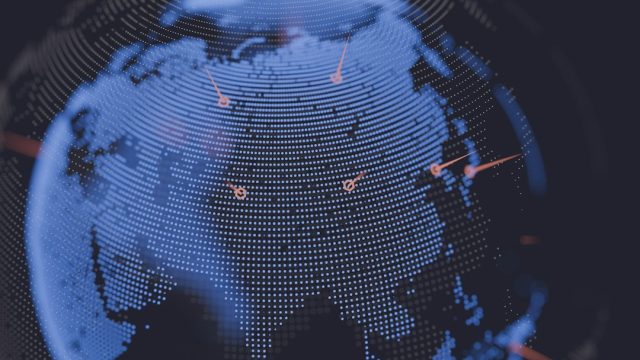
For centuries, national strategy was anchored in territorial defense, industrial mobilization, and physical resource security. Governments measured their strategic depth by their capacity to extract raw materials, forge steel, amass large standing armies, and secure maritime trade routes against rival empires. In the 21st-century network society, that Westphalian calculus has been thoroughly superseded. Critical technologies—ranging…
For centuries, global political power was determined by geography, physical borders, and the tangible instruments of statecraft. Governments projected power across oceans, defended territory with standing armies, and secured economic dominance through shipping lanes, factories, and physical resource extraction. In the 21st-century network society, that Westphalian calculus has been fundamentally re-engineered. Digital infrastructure is no…
For generations, conventional political science and democratic theory treated elections as the high-water mark of civic life. Voting in a periodic ballot, joining a political party, and waiting for legislative cycles defined the totality of legitimate political participation. In the 21st-century network society, that ballot-box centric model has been thoroughly disrupted. Political participation is no…
For centuries, human civilization understood politics through walls, borders, and buildings. Political life was anchored in physical assemblies, territorial nation-states, parliamentary chambers, and centralized bureaucratic hierarchies. A government’s reach was coextensive with its geography, and political power was measured by its command over physical territory and institutional permanence. Today, that Westphalian architecture has been thoroughly…
Daftar kata kunci yang Anda ajukan—kekuasaan politik, dunia terhubung, platform sovereignty, algokrasi, kedaulatan digital, dan sosiologi politik—merupakan batu penjuru dari keseluruhan bangunan teoretis yang telah kita susun. Rangkaian konsep ini merangkum metamorfosis kekuasaan umat manusia: dari benteng teritorial yang kaku menuju arsitektur jaringan transnasional yang cair, algoritmik, dan dikendalikan oleh infrastruktur digital privat. Berikut adalah…
For centuries, power was tangible, visible, and bounded. It was measured in square miles of territory, divisions of troops, gold reserves in central vaults, and the formal authority of legislative halls. A government’s capacity to shape outcomes was coextensive with its physical borders and the administrative reach of its bureaucracy. In the 21st-century interconnected world,…
For centuries, political power was bound by distance, physical borders, and national logistics. The reach of a state’s authority, the speed of its administration, and the spread of its cultural or ideological influence were all constrained by the time it took for ships to sail, trains to travel, or paper documents to cross physical territories.…
For decades, physical infrastructure—roads, railways, power grids, and telephone lines—was treated as a neutral matter of engineering and economics. Governments funded or regulated these systems to ensure public utility, while citizens viewed them as background plumbing that quietly enabled modern life. In the 21st-century digital ecosystem, that era of infrastructural neutrality has completely vanished. Digital…
For centuries, how citizens encountered politics was dictated by physical geography, institutional routines, and human editors. People read local newspapers, watched scheduled evening broadcasts, attended physical rallies, or discussed current events with neighbors and colleagues. Encounters with political news were bounded, deliberate, and mediated by human judgment. In the 21st-century digital ecosystem, that human-curated encounter…
For centuries, the political landscape was shaped by the material and geographical constraints of the industrial nation-state. Politics was organized around territorial borders, physical town halls, paper ballots, mass-media broadcasting, and hierarchical political parties that moved at a measured, predictable pace. In the 21st-century networked society, that traditional architecture has been thoroughly upended. Technology is…